
When people think about solar, they usually picture panels on the roof or maybe a battery on the garage wall. But there’s one piece of equipment doing the real heavy lifting behind the scenes… the solar inverter.
Often overlooked, the inverter is the heart and brain of your solar system. It determines how efficiently your system runs, how much energy you actually use, and whether your setup can grow in the future with batteries, EV chargers, or backup power.
What does a solar inverter actually do?
Solar panels generate electricity in the form of direct current (DC). Unfortunately, your home doesn’t run on DC power it uses alternating current (AC). That’s where the inverter comes in.
The inverter’s primary job is to convert DC electricity from your solar panels into AC electricity that your home appliances can use. But modern inverters do far more than simple conversion.
Today’s inverters also:
• Monitor system performance in real time
• Optimise energy output throughout the day
• Manage battery charging and discharging
• Control grid export and safety shutdowns
• Enable monitoring through apps and portals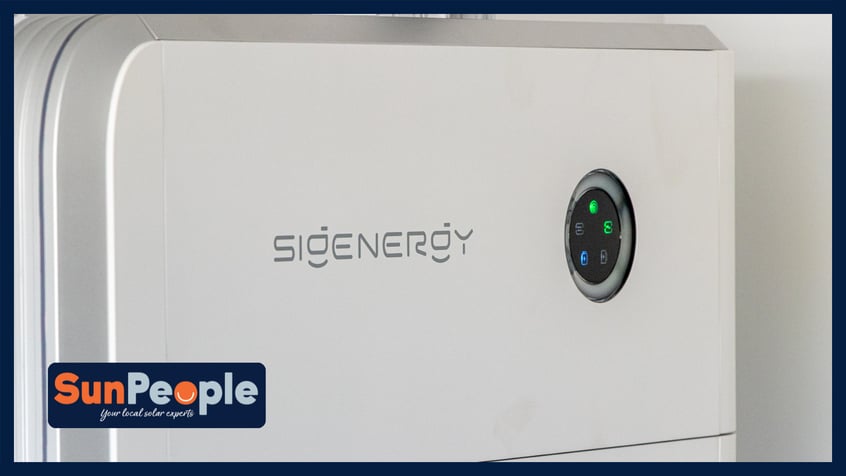
Types of solar inverters explained
There’s no one-size-fits-all inverter and there are many different type of inverters. The right choice depends on roof layout, shading, future plans, and budget.
String Inverters
String inverters are the most common type in Australian homes. Panels are wired together in “strings”, and the inverter manages the power output of the entire string.
They’re reliable, cost-effective, and ideal for simple roof layouts with minimal shading.
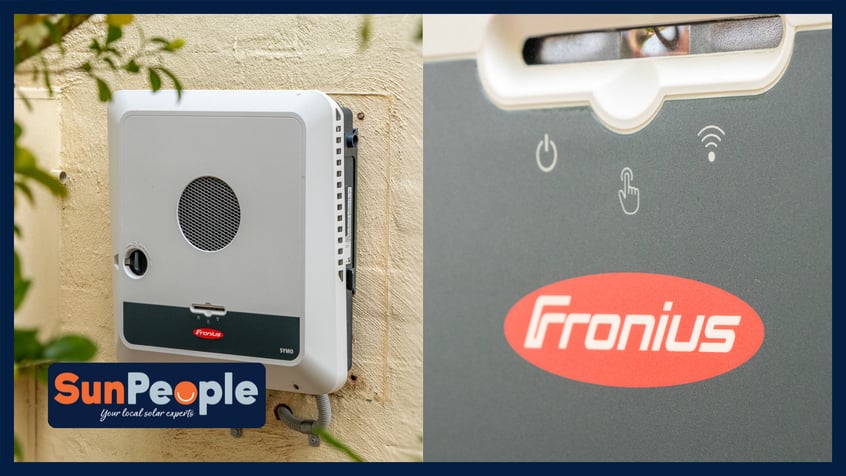
Brands like Fronius and Sungrow are widely used in Australian residential systems due to their performance and reliability.
Hybrid inverters
Hybrid inverters are designed to work with both solar panels and batteries, allowing homeowners to add storage now or later without replacing the inverter.
This makes them a popular choice for households planning to access battery rebates or Virtual Power Plant programs
Microinverters
Microinverters are installed behind each panel rather than using a single central inverter. Each panel operates independently, which can improve performance on complex or shaded roofs.
Why inverter quality matters more than you think
Two homes can have the same solar panels but very different results depending on inverter quality.
A high-quality inverter can improve energy yield, handle Australian heat more effectively, and support future upgrades like batteries and EV chargers.
Lower-quality inverters are often the first component to fail in a solar system, leading to downtime and replacement costs.
Inverters and batteries: why compatibility matters
Not all inverters are battery-compatible, and not all batteries work with all inverters. Hybrid and battery-integrated inverter platforms are designed to communicate safely and efficiently with storage systems.
Compatibility is also essential for accessing government incentives and VPP participation.
Inverters, safety, and Australian standards
Inverters are a critical safety device. During a blackout, grid-connected inverters must shut down automatically to protect line workers.
Backup-capable systems use specialised inverter functions to isolate the home safely while continuing to supply power internally.
Monitoring, data, and smart energy use
Modern inverters provide homeowners with detailed performance data through monitoring apps and online portals, helping optimise usage and maximise savings.
Final Thoughts
The new battery rebate hasn’t just been “popular”, it’s fundamentally reshaping how Australian homes use energy. With over 100,000 installations and counting, and billions in funding being rapidly taken up, the Cheaper Home Batteries Program is accelerating a second wave of the clean energy transition: from generating solar to storing it.
For homeowners, it’s a rare moment where policy, technology and household economics are all pointing in the same direction. The key is making a smart, informed decision while the support is still strong.
Ready to maximise your savings and take control of your power?
Let’s power your home for a better tomorrow.
Sources:
- Australian Government – Solar PV & Inverters overview (NSW): https://www.energy.nsw.gov.au/households/upgrades/solar
- YourHome.gov.au – Photovoltaic Systems (Inverters explained): https://www.yourhome.gov.au/energy/photovoltaic-systems
- Solar VIC – Finding the Right Inverter for Your System
https://www.solar.vic.gov.au/solar-panel-pv/section-5-finding-right-inverter-your-system - SolarQuotes – Solar Inverters: Ultimate Homeowner Guide (independent): https://www.solarchoice.net.au/products/inverters/ultimate-guide-to-solar-inverters/
- ArXiv – PV Inverter Control Research (academic):
https://arxiv.org/abs/2006.12644
