---
title: Why Solar Quotes Vary So Much?
description: Why do solar quotes vary so much? Learn what affects solar pricing in Australia including panels, inverters, installation quality and warranties.
image: https://sunpeople.sunpeople.com.au/hubfs/260304_Why%20Solar%20Quotes%20Vary%20So%20Much_1.png
---
Call (02) 4257 0974
- [Quick Quote](https://sunpeople.com.au/quick-quote/)
- [Refer a friend](https://sunpeople.sunpeople.com.au/refer-a-friend)
- [Support](https://sunpeople.com.au/support/)
#
[Contact Us](https://sunpeople.sunpeople.com.au/contact-us/)
- [Solar Packages](https://sunpeople.com.au/solar-packages/)
- Services
- [Solar Panels](https://sunpeople.com.au/solar/)
- [Inverters](https://sunpeople.com.au/inverters/)
- [Batteries](https://sunpeople.com.au/batteries/)
- [EV Charging](https://sunpeople.com.au/ev-charging/)
- Off-Grid (coming soon)
- [Maintenance](https://sunpeople.com.au/maintenance/)
- [Privacy Policy](https://sunpeople.com.au/privacy-policy/)
- [Commercial](https://sunpeople.com.au/commercial/)
- About
- [About Us](https://sunpeople.com.au/About-us/)
- [Install Gallery](https://sunpeople.sunpeople.com.au/install-gallery)
- [Testimonials](https://sunpeople.com.au/testimonials/)
- [EV Charging](https://sunpeople.com.au/ev-charging/)
- [FAQ](https://sunpeople.com.au/commercial/faq)
- [SunPeople Blogs](https://sunpeople.sunpeople.com.au/blog)
- [Warranty](https://sunpeople.com.au/warranty/)
- [Support](https://sunpeople.com.au/support/)
- [Contact Us](https://sunpeople.com.au/contact-us/)
# Why Solar Quotes Vary So Much (And What Actually Matters)
Posted by [SunPeople](https://sunpeople.sunpeople.com.au/blog/author/sunpeople) on Mar 5, 2026 6:45:00 AM
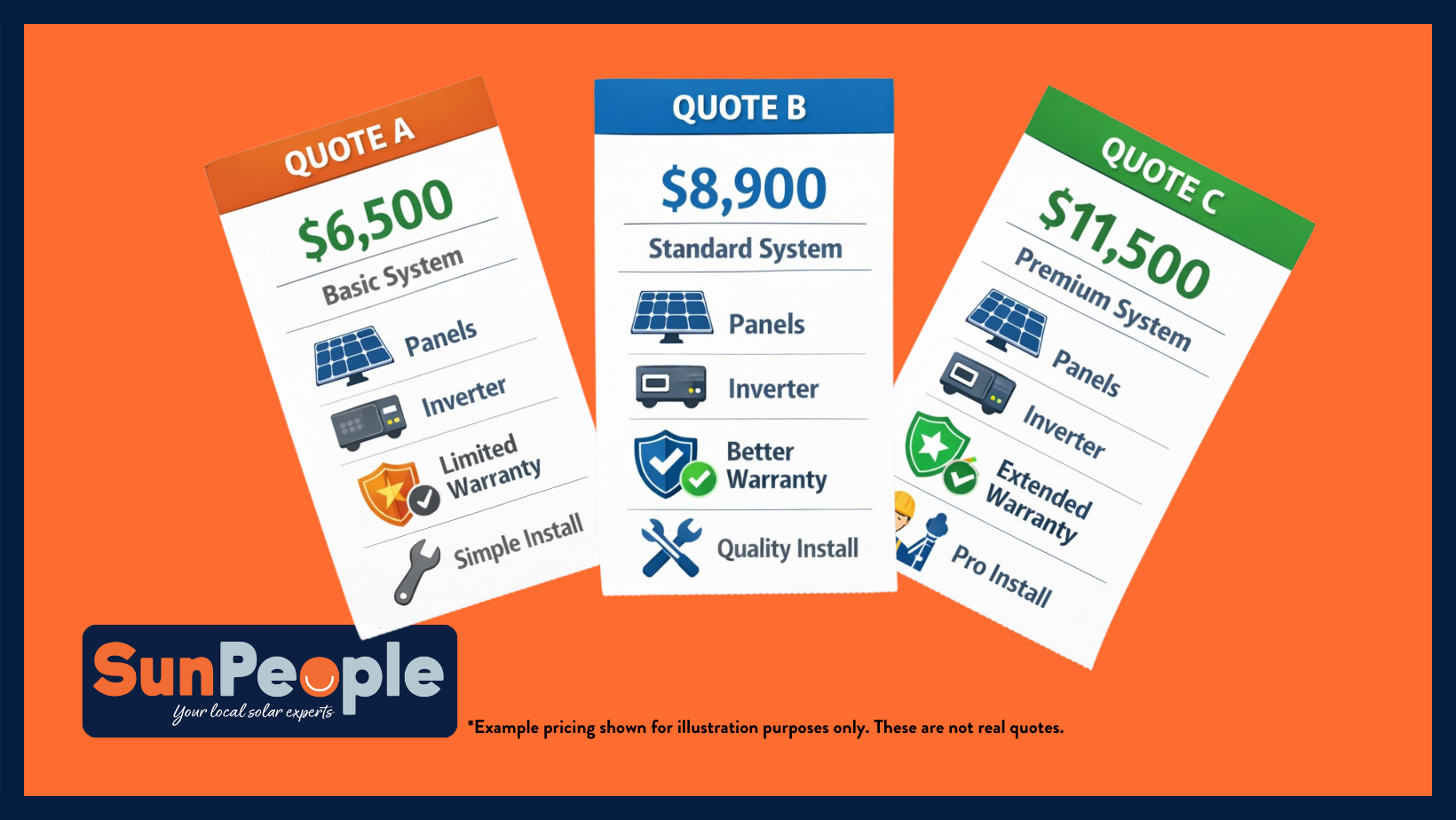
If you’ve started exploring solar for your home, you may have already noticed something surprising: solar quotes can vary a lot.
It’s not uncommon for homeowners to receive three quotes for what seems like the same system and see prices ranging from several thousand dollars apart. Naturally, this raises questions. Is someone overcharging? Is someone cutting corners? Or are the systems actually different?
The truth is that a solar system isn’t a single product like a television or a fridge. It’s a combination of equipment, design, installation quality, and long-term service. Each of these factors can influence the price of a quote.
Understanding these differences helps homeowners make better decisions and focus on the factors that actually affect the long-term value of a solar system.
Not All Solar Panels Are the Same
Solar panels produce DC electricity (direct current). Most homes run on AC electricity (alternating current). That means your system usually needs an inverter to convert DC into AC so your home can use it.
A battery can store electricity too, but whether it stores it as DC or AC (and where the conversions happen) is the whole difference between DC-coupled and AC-coupled.
#### Not All Solar Panels Are the Same
Solar panels might look very similar on the surface, but there can be significant differences in how they perform and how long they last.
Manufacturing quality, cell technology, and efficiency all play a role in how much electricity a panel produces over time. Higher-quality panels often maintain their output more consistently over their lifespan, which can be 25 years or more.
Warranty terms can also vary. Many panels come with a performance warranty that guarantees a certain level of energy output over time. Panels with stronger warranties often reflect higher manufacturing standards and reliability.
For homeowners comparing quotes, the panel brand and specifications can be one of the first clues as to why two systems may be priced differently.
#### The Inverter Plays a Huge Role
While solar panels are the most visible part of a system, the inverter is often described as the “engine” of the installation.
Solar panels produce DC electricity, but homes run on AC electricity. The inverter converts this energy so it can power your appliances.
Because the inverter performs this conversion constantly, its reliability and efficiency are critical to the overall performance of the system. Higher-quality inverters often include advanced monitoring, longer warranties, and better performance tracking.
A cheaper inverter may reduce the upfront price of a quote, but it can also shorten the lifespan of the system or reduce its efficiency over time.
#### System Design Is Often the Hidden Difference
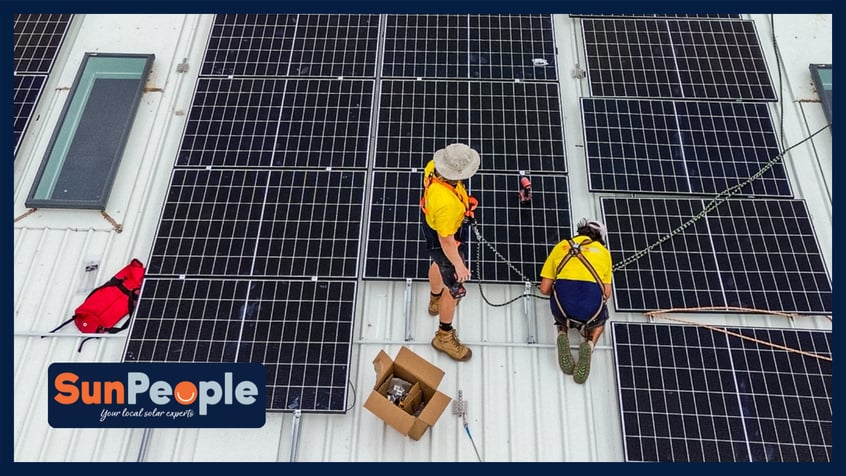
Two quotes may include the same number of panels and the same inverter brand, yet still produce very different energy outputs. This often comes down to system design.
Good solar design considers factors such as:
• roof orientation
• shading from trees or nearby structures
• panel layout and spacing
• electrical string configuration
A well-designed system ensures panels are placed where they receive the most sunlight and operate efficiently together.
In many cases, a lower-priced quote may simply involve less detailed system design. The panels might fit on the roof, but they may not be positioned to maximise long-term energy production.
#### Installation Quality and Safety Standards
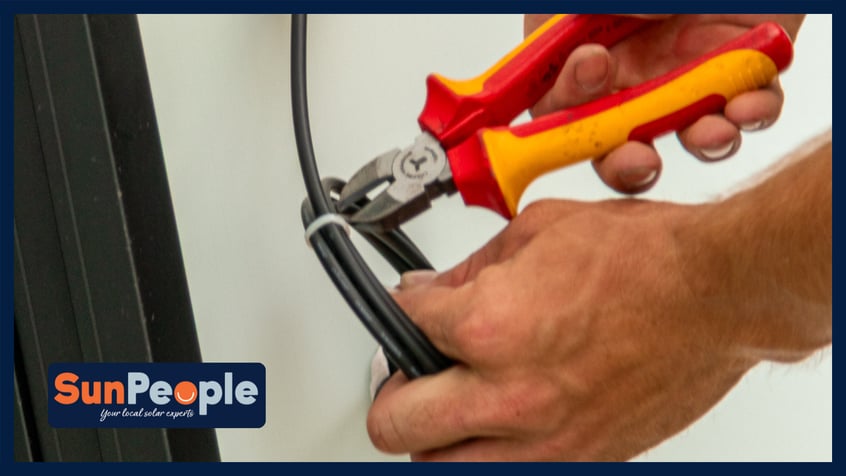
Solar systems are expected to operate safely for decades while exposed to weather, heat, and electrical loads.
Installation quality therefore plays a major role in system reliability.
Professional installers consider details such as:
• secure mounting hardware
• roof waterproofing
• electrical protection systems
• compliance with Australian safety standards
A well-installed system protects both your roof and your electrical system, helping ensure the installation performs reliably over time.
#### Warranties and After-Sales Support
Another key factor in solar quotes is what happens after the system is installed.
Some quotes include strong installation warranties and ongoing support, while others may focus purely on the initial installation.
There are typically three types of warranties involved:
• panel product warranties
• panel performance warranties
• workmanship warranties from the installer
Having a company available to service the system if issues arise can make a significant difference over the life of the system.
#### Cheap Solar vs Long-Term Value
A lower-priced quote may look appealing at first glance, especially when systems appear similar on paper.
However, solar is a long-term investment. The value of the system is determined by how much energy it produces over 20 to 25 years and how reliably it performs during that time.
Small differences in equipment quality, system design, and installation standards can have a meaningful impact on long-term energy production.
For many homeowners, the best solar investment is not necessarily the cheapest system, but the one designed to perform reliably for decades.
#### Conclusion
Solar quotes vary because solar systems themselves can vary in many important ways. Equipment quality, system design, installation standards, and long-term support all contribute to the overall cost of a system.
Rather than focusing only on the price, homeowners benefit from comparing quotes based on the quality of the equipment, the thought put into system design, and the reliability of the installer.
A well-designed solar system should deliver reliable energy, lower electricity bills, and peace of mind for many years to come.
---
Ready to maximise your savings and take control of your power?
[](https://cta-redirect.hubspot.com/cta/redirect/4324478/8172095f-b19e-40da-9179-b7cee19ed3d8)
Let’s power your home for a better tomorrow.
---
#### Sources:
1. Australian Government – Solar PV and Batteries (Energy.gov.au):
[https://www.energy.gov.au/households/solar-pv-and-batteries](https://www.energy.gov.au/households/solar-pv-and-batteries)
2. YourHome.gov.au – Photovoltaic Systems:
[https://www.yourhome.gov.au/energy/photovoltaic-systems](https://www.yourhome.gov.au/energy/photovoltaic-systems)
3. SolarQuotes – Solar Panel Guide: [https://www.solarquotes.com.au/panels/](https://www.solarquotes.com.au/panels/)
4. SolarQuotes – Solar Inverter Guide: [https://www.solarquotes.com.au/inverters/](https://www.solarquotes.com.au/inverters/)
5. Solar Choice – Solar Panel Comparison Guide: [https://www.solarchoice.net.au/solar-panels/](https://www.solarchoice.net.au/solar-panels/)
6. International Energy Agency (IEA) – Solar PV: [https://www.iea.org/energy-system/renewables/solar-pv](https://www.iea.org/energy-system/renewables/solar-pv)
Topics: [renewable energy](https://sunpeople.sunpeople.com.au/blog/tag/renewable-energy), [solar panel guide](https://sunpeople.sunpeople.com.au/blog/tag/solar-panel-guide), [SunPeople](https://sunpeople.sunpeople.com.au/blog/tag/sunpeople), [solar quotes](https://sunpeople.sunpeople.com.au/blog/tag/solar-quotes)
### Recent Posts
### Subscribe Here!
###### Contact SunPeople
(02) 4257 0974
Unit 1/5 Sunset Ave
Barrack Heights NSW 2528
Open Monday – Friday
8:00am – 4:00pm
[Contact Us](https://sunpeople.sunpeople.com.au/contact-us/)
###### Quick Links
- [Solar Packages](https://www.sunpeople.com.au/solar-packages)
- [Commercial](https://www.sunpeople.com.au/commercial)
- [About us](https://www.sunpeople.com.au/about-us)
- [Support](https://www.sunpeople.com.au/support)
- [FAQ](https://www.sunpeople.com.au/faq)
- [Quick Quote](https://www.sunpeople.com.au/quick-quote)
- [Refer a Friend](https://sunpeople.sunpeople.com.au/refer-a-friend)
- [Warranty](https://www.sunpeople.com.au/warranty)
- [Privacy Policy](https://www.sunpeople.com.au/privacy)
- [Maintenance](https://www.sunpeople.com.au/maintenance/)

© 2017-2024 SunPeople Ltd. Designed by [Studio Friday](https://www.studiofriday.com.au/). Developed by [Circular Creative](https://circularcreative.com.au/).
Illustrations by [Kiara Mucci](https://www.instagram.com/themuccibird) ©. Photographs by [Justin Barton](https://www.instagram.com/jbaarton) Photography.